
Are you looking for reliable Waterproofing Flat Roof Experts in Brooklyn, NY, to protect your property from leaks, moisture intrusion, and costly structural damage? A flat roof can offer practical advantages for residential and commercial buildings. However, because its surface has limited slope, water drainage and waterproofing require careful attention. Therefore, choosing an appropriate waterproofing solution is essential for maintaining your roof’s performance throughout the year.
Elite Roofing Group helps property owners explore roofing, repair, inspection, and waterproofing solutions suited to their building’s needs. Whether you own a residential property, manage a commercial facility, or oversee a multifamily building, protecting the roof against moisture can help preserve the structure and reduce the risk of interior damage.
In Brooklyn, roofs must withstand changing weather conditions, including heavy rain, snow, freezing temperatures, and summer heat. Consequently, waterproofing materials and drainage systems must be suitable for the building’s roof design and environmental exposure.
Moreover, even a small weakness around a seam, flashing detail, drain, or rooftop penetration can allow water to enter. As a result, what initially appears to be a minor roofing problem may eventually affect insulation, ceilings, walls, and other building components.
Fortunately, timely inspections and suitable waterproofing measures can help property owners identify vulnerabilities before they develop into more serious concerns. With professional guidance from Elite Roofing Group, you can explore practical options for protecting your flat roof and maintaining your property’s long-term condition.
Waterproofing Flat Roof Experts in Brooklyn, NY – Reliable Roof Protection by Elite Roofing Group | Brooklyn NY | Elite Roofing Group NY
Flat roofs are common on commercial buildings, apartment complexes, mixed-use properties, and certain residential structures throughout Brooklyn. Although these roofs are not perfectly level, they typically have a relatively low slope that directs water toward drains or designated drainage points.
However, when water cannot drain efficiently, it may collect on the roof surface. Over time, standing water can place additional demands on the roofing membrane and expose existing weaknesses.
Therefore, effective waterproofing involves more than applying a protective coating. It also requires evaluating the roof’s overall condition, drainage performance, seams, flashing, and vulnerable transitions.
Furthermore, Brooklyn’s seasonal weather can create additional challenges. During colder months, water can freeze and thaw repeatedly, potentially worsening existing cracks or weaknesses. Meanwhile, summer heat and direct sunlight can contribute to the aging of certain roofing materials.
Consequently, property owners should consider waterproofing as part of a broader roof maintenance strategy rather than waiting until water reaches the interior.
Professional roof waterproofing services can help property owners understand available protection options and determine which approach may be appropriate for their particular roofing system.
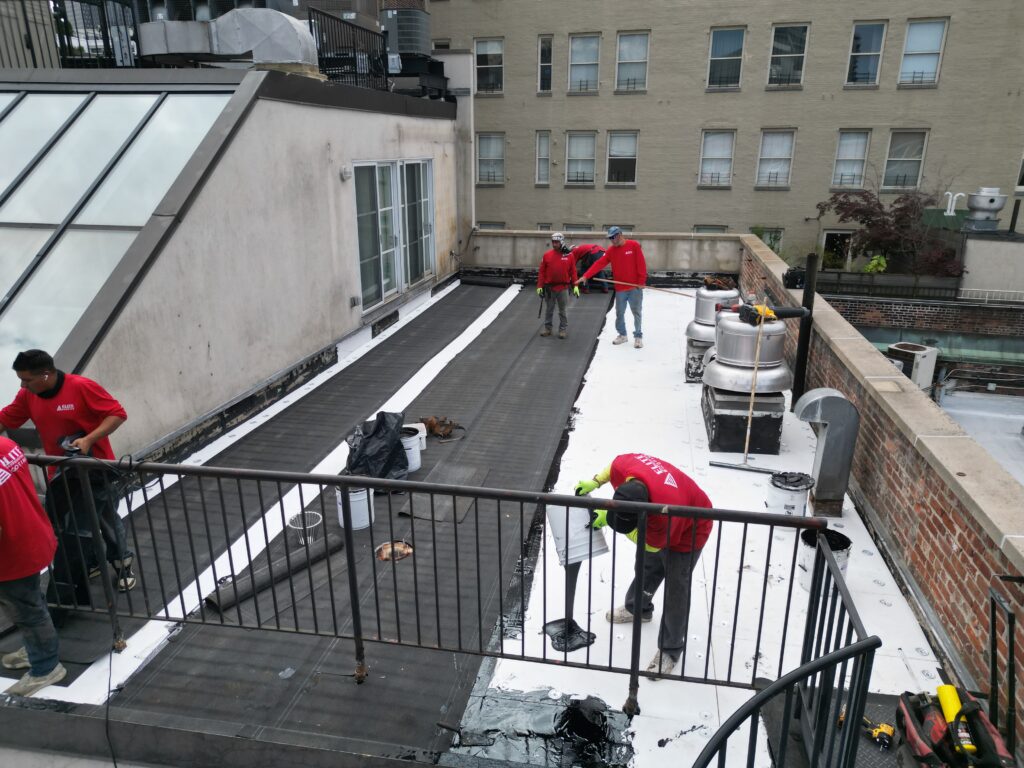
Common Flat Roof Problems That Require Waterproofing
A flat roof can develop several types of defects as its materials age or experience repeated exposure to the elements. Nevertheless, identifying these problems early can help property owners make informed decisions about repairs and waterproofing.
Water Ponding on the Roof Surface
Ponding occurs when water remains on a roof instead of draining away within the expected period. Although temporary moisture after rainfall can be normal, persistent ponding deserves attention.
For example, blocked drains, inadequate drainage, or depressions in the roof surface may prevent water from flowing efficiently. Consequently, moisture may remain around seams and other vulnerable areas for extended periods.
A professional assessment can help determine whether the issue involves drainage maintenance, roof slope, membrane deterioration, or another underlying problem.
Cracked or Deteriorating Roofing Membranes
The roofing membrane serves as a protective barrier against water intrusion. However, prolonged exposure to weather, material aging, movement, and previous repairs can weaken this barrier.
As a result, cracks, splits, punctures, or deteriorated sections may develop. Furthermore, these defects can allow moisture to enter the roofing assembly if they are not addressed appropriately.
Depending on the roof’s construction and condition, a targeted repair or a more extensive waterproofing treatment may be necessary.
Damaged Seams and Roof Joints
Many flat roofing systems contain seams where individual membrane sections connect. Additionally, joints around roof edges, parapet walls, and other transitions require careful detailing.
If these connections weaken, water may find a path beneath the protective surface. Therefore, inspecting seams and joints is an important part of evaluating flat roof waterproofing needs.
Defective Flashing Around Roof Penetrations
Flat roofs frequently contain vents, pipes, HVAC equipment, and other penetrations. These areas require suitable flashing to help maintain a watertight connection between the roofing material and the surrounding components.
However, flashing can deteriorate, separate, or become damaged over time. Consequently, water may enter around otherwise serviceable roof sections.
Addressing these details is especially important because waterproofing performance depends on the entire roof assembly rather than the membrane alone.
Interior Water Stains and Persistent Leaks
Brown ceiling stains, peeling paint, damp insulation, and recurring leaks can indicate that moisture has entered the building. Nevertheless, the location of an interior stain does not always identify the exact point of roof failure.
Water may travel along structural components before becoming visible indoors. Therefore, a thorough inspection is necessary to trace the source and determine the appropriate repair.
Elite Roofing Group offers information about professional roof repair services for property owners dealing with roofing defects and leak concerns.
How Waterproofing Flat Roof Experts in Brooklyn, NY, Protect Your Property
Effective waterproofing begins with understanding how a roof is constructed and where its weaknesses may occur. Therefore, a professional approach should consider the entire roofing system instead of treating the visible leak as an isolated problem.
Step 1: Comprehensive Roof Inspection
First, the roof should be evaluated for visible damage, membrane deterioration, drainage problems, defective flashing, and vulnerable seams.
Additionally, the inspection may include reviewing rooftop equipment, roof edges, penetrations, and areas where water tends to collect.
This process helps establish the roof’s current condition and identifies concerns that may require immediate attention.
For property owners who want to understand their roof’s condition, professional roof inspection services can provide a starting point for planning appropriate maintenance or repairs.
Step 2: Identify the Source of Moisture Intrusion
Next, the source of the water problem must be identified. Although a visible leak may appear near a ceiling fixture or wall, the actual entry point could be several feet away.
For example, damaged flashing, a failed seam, or a punctured membrane may allow water to travel through concealed spaces before becoming noticeable indoors.
Consequently, identifying the underlying cause helps reduce the risk of performing repairs that fail to address the real problem.
Step 3: Repair Existing Roofing Defects
Before waterproofing materials are applied, damaged areas may require appropriate repairs. Depending on the roof system, this can involve repairing membrane defects, correcting flashing details, restoring seams, or addressing other deteriorated components.
Furthermore, wet or compromised materials may require additional evaluation before they can be covered.
This step is essential because waterproofing products cannot reliably compensate for every structural defect or unresolved drainage problem.
Step 4: Select a Suitable Waterproofing System
Once the roof has been assessed and necessary repairs have been identified, the next step is selecting an appropriate waterproofing system.
Different roofing systems may require different materials and installation methods. For example, certain roofs may be suitable for liquid-applied membranes, while others may require compatible sheet membranes or specialized protective treatments.
Therefore, material selection should account for the existing roof assembly, substrate condition, drainage characteristics, exposure, and manufacturer requirements.
Step 5: Protect Seams, Edges, and Penetrations
Roof waterproofing must account for transitions and vulnerable details. In particular, roof edges, flashing, joints, drains, and equipment penetrations deserve careful attention.
Otherwise, even a newly treated roof may remain vulnerable if these areas are not properly addressed.
Consequently, a complete waterproofing plan should focus on maintaining continuity across the entire protective system.
Step 6: Review Drainage and Final Conditions
Finally, the roof’s drainage arrangements and completed work should be reviewed. Although waterproofing helps prevent moisture intrusion, it cannot replace a properly functioning drainage system.
Therefore, drains and outlets should remain clear, and any persistent ponding should be investigated.
By combining suitable materials, proper detailing, and drainage assessment, property owners can work toward a more reliable roofing system.
Benefits of Professional Flat Roof Waterproofing
Investing in appropriate waterproofing can provide several practical benefits. However, the results depend on the roof’s condition, the selected system, and the quality of the installation.
Reduced risk of water intrusion: A properly installed waterproofing system can help protect vulnerable roof surfaces and connections against moisture.
Protection for interior spaces: By addressing roof weaknesses, property owners may reduce the risk of water reaching ceilings, walls, insulation, and interior finishes.
Support for roof longevity: Correct repairs and compatible waterproofing materials may help protect suitable existing roofing assemblies from further deterioration.
Better maintenance planning: A professional assessment can reveal areas that need attention and help property owners plan future maintenance.
Improved property protection: Preventing avoidable moisture damage can help preserve building materials and reduce disruption to occupants.
More informed repair decisions: Understanding the roof’s condition can help owners determine whether targeted repairs, waterproofing, or more extensive replacement work is appropriate.
Moreover, waterproofing can be particularly valuable for buildings where roof leaks could interrupt business operations, damage stored materials, or affect multiple residential units.
Nevertheless, waterproofing is not a permanent guarantee against every leak. Therefore, periodic inspections and appropriate maintenance remain important after installation.
Residential Flat Roof Waterproofing in Brooklyn
Residential flat roofs can be found on apartment buildings, extensions, garages, and certain modern homes. However, the waterproofing requirements of each property depend on its design, materials, drainage, and existing condition.
For homeowners, moisture intrusion can damage ceilings, insulation, flooring, and personal belongings. Furthermore, persistent dampness may create conditions that encourage mold growth if affected materials remain wet.
Therefore, identifying roof defects promptly is an important part of protecting the home.
A suitable waterproofing plan may include repairing vulnerable seams, improving flashing details, addressing drainage issues, and applying a compatible protective system where appropriate.
Additionally, homeowners should consider the condition of roof edges, parapets, and connections between the roof and exterior walls.
Elite Roofing Group provides information about its residential roofing services for property owners exploring roofing solutions for their homes.
Ultimately, the appropriate approach depends on the existing roofing system and whether the underlying structure remains suitable for repair.
Commercial Flat Roof Waterproofing for Brooklyn Businesses
Commercial properties often depend on reliable roofing systems to protect equipment, inventory, employees, and daily operations. Consequently, roof leaks can create problems that extend beyond the cost of repairing the roof itself.
For example, moisture intrusion may damage office ceilings, electrical components, stored materials, and interior finishes. In addition, recurring leaks can disrupt business activities and create maintenance challenges for property managers.
Therefore, commercial flat roof waterproofing should be approached with careful planning and attention to the building’s operational requirements.
A commercial roof assessment may examine membrane condition, drainage, rooftop HVAC equipment, flashing, and other vulnerable details. Furthermore, the findings can help determine whether repairs, waterproofing, or a larger roofing project is appropriate.
Depending on the building, scheduling work around business operations may also be an important consideration.
Property owners and managers can explore commercial roofing services from Elite Roofing Group to learn more about available roofing solutions.
Moreover, regular inspections can help commercial property managers identify developing concerns before they lead to more extensive disruption.
The Importance of Exterior Building Restoration
Roof leaks can sometimes affect more than the roof itself. When water enters a building, it may damage exterior walls, masonry, flashing connections, and other components.
Consequently, restoring the roof alone may not address all the damage if moisture has also affected surrounding building materials.
For example, a leak near a parapet wall may involve both roofing details and the exterior wall connection. Similarly, deteriorated joints or damaged exterior surfaces may contribute to moisture entry.
Therefore, evaluating related building components can help establish a more complete repair plan.
Elite Roofing Group offers information about exterior building restoration services for property owners who need to address deterioration beyond the roofing membrane.
By considering the roof and surrounding exterior together, owners can better understand the source of moisture problems and the work needed to resolve them.
How Brooklyn Weather Affects Flat Roof Waterproofing
Brooklyn experiences seasonal changes that can place different demands on roofing materials throughout the year. Therefore, waterproofing systems should be selected with local weather exposure in mind.
During winter, freezing temperatures and repeated freeze-thaw cycles may worsen existing cracks or weaknesses. Meanwhile, snow accumulation and melting can increase the importance of reliable drainage.
During spring and summer, rainfall and warmer temperatures can expose weaknesses in seams, flashing, and membrane surfaces. In addition, sunlight and heat can contribute to the aging of some roofing materials.
Furthermore, strong winds can affect roof edges, flashing, and other exposed components.
For these reasons, roof maintenance should not be limited to the period immediately after a leak appears. Instead, routine inspections can help property owners identify problems before seasonal weather makes them more difficult to address.
Importantly, snow and ice should never be removed from a roof without appropriate safety precautions and a suitable method. Improper removal can damage roofing materials or create serious fall hazards.

Flat Roof Waterproofing Maintenance Tips for Property Owners
Although professional waterproofing is important, regular maintenance also plays a valuable role in protecting a roof.
First, keep drainage outlets clear of leaves and other debris. Blocked drains can interfere with water removal and contribute to ponding.
Second, schedule periodic roof inspections. Even when no leak is visible indoors, inspections may reveal deteriorating seams, damaged flashing, or other developing concerns.
Third, pay attention to interior warning signs, including ceiling discoloration, peeling paint, damp odors, or unexplained moisture.
Fourth, arrange repairs when defects are identified. Small problems may become more complicated if water continues entering the building.
Finally, maintain records of inspections, repairs, and waterproofing work. These records can help property owners monitor recurring issues and plan future maintenance.
Additionally, avoid walking across the roof unnecessarily, especially when surfaces are wet, icy, or structurally questionable. Instead, use qualified professionals for work that requires rooftop access.
By following these maintenance practices, property owners can support the performance of their waterproofing system and make better-informed decisions about future repairs.
When Should You Consider Flat Roof Waterproofing?
The right time to consider waterproofing depends on the roof’s age, material, condition, and exposure to moisture.
For example, recurring leaks may indicate that the roof needs immediate assessment. Similarly, visible membrane deterioration, damaged flashing, or persistent ponding may justify a closer inspection.
However, waterproofing may also be considered as part of a planned maintenance strategy when the existing roof remains suitable for treatment.
Before proceeding, property owners should determine whether the roof is structurally sound and whether any trapped moisture or damaged materials must be addressed first.
Furthermore, the proposed system should be compatible with the existing roofing assembly. Applying an incompatible coating or covering unresolved defects may lead to disappointing results.
Therefore, an inspection is essential for determining whether waterproofing is appropriate or whether more extensive repair or replacement is necessary.
Frequently Asked Questions About Waterproofing Flat Roof Experts in Brooklyn, NY
1. What Does Flat Roof Waterproofing Do?
Flat roof waterproofing creates or restores a protective barrier designed to limit water intrusion. Depending on the roofing system, this may involve membranes, compatible coatings, repaired seams, and properly detailed flashing. However, effective protection also depends on suitable drainage and sound underlying materials.
2. How Do I Know If My Flat Roof Needs Waterproofing?
Common warning signs include recurring leaks, damaged membranes, deteriorating seams, defective flashing, and persistent ponding. Nevertheless, some roof defects may not be visible from inside the building. Therefore, a professional inspection can help determine the roof’s condition.
3. Can Waterproofing Stop an Existing Roof Leak?
Waterproofing may help address a leak when the underlying cause is identified and properly repaired. However, simply applying a coating over damaged materials or unresolved defects may not solve the problem. Consequently, inspection and appropriate preparation should come first.
4. How Long Does Flat Roof Waterproofing Last?
The lifespan of a waterproofing system depends on the material, installation quality, weather exposure, roof maintenance, and existing conditions. Therefore, there is no single lifespan that applies to every roof. Following manufacturer recommendations and arranging periodic inspections can help maintain performance.
5. Is Flat Roof Waterproofing Suitable for Commercial Buildings?
Yes, many commercial flat roofs can benefit from suitable waterproofing systems. However, the appropriate solution depends on the existing roof assembly, building use, drainage, and condition. A professional assessment can help determine which options are appropriate.
6. Can Waterproofing Be Applied Over an Existing Flat Roof?
In some cases, waterproofing materials can be applied over an existing roof. Nevertheless, the surface must meet the selected system’s requirements, and trapped moisture or deteriorated materials may need to be addressed first. Compatibility should be confirmed before installation.
7. Why Is Roof Drainage Important for Waterproofing?
Proper drainage helps direct water away from the roof surface. If drains become blocked or water collects in depressions, the roof may experience prolonged moisture exposure. Therefore, drainage assessment is an important part of a complete waterproofing strategy.
8. Does Elite Roofing Group Offer Roof Repair Services?
Elite Roofing Group provides information about roof repair services for property owners dealing with roofing concerns. You can explore its roof repair solutions to learn more about the available service options.
9. Should I Repair or Replace My Flat Roof?
The decision depends on the roof’s age, structural condition, extent of damage, and the suitability of the existing materials. If the roof remains in sound condition, targeted repairs or waterproofing may be practical. However, widespread deterioration or extensive moisture damage may make replacement more appropriate.
10. How Can I Contact Elite Roofing Group for Flat Roof Waterproofing?
To discuss your property’s roofing needs, visit the Elite Roofing Group contact page. Explain the type of roof, the problems you have noticed, and any recurring leaks so the next steps can be discussed.
Protect Your Property with Waterproofing Flat Roof Experts in Brooklyn, NY
A reliable flat roof plays an essential role in protecting your building from rain, snow, moisture, and changing temperatures. However, even a well-constructed roof can develop problems as its materials age or its components experience repeated weather exposure.
Fortunately, appropriate waterproofing, timely repairs, and regular inspections can help property owners manage these risks more effectively.
Elite Roofing Group provides information about roofing, repair, inspection, waterproofing, and exterior restoration solutions for residential and commercial properties. Whether you are dealing with recurring leaks, deteriorating seams, drainage problems, or concerns about the condition of your roof, a professional assessment can help you understand the available options.
Moreover, addressing the underlying cause of a roofing problem is essential for achieving dependable results. Rather than relying solely on a surface treatment, an effective plan should consider the roof membrane, drainage, flashing, penetrations, and surrounding building components.
If you are searching for Waterproofing Flat Roof Experts in Brooklyn, NY, consider arranging an assessment to determine the most suitable approach for your property.
Ready to take the next step toward better roof protection? Contact Elite Roofing Group to discuss your flat roof concerns and explore the appropriate roofing and waterproofing solutions. With suitable materials, careful installation, and ongoing maintenance, you can work toward protecting your property and maintaining the long-term performance of your roof.