Commercial buildings in Brooklyn face changing weather conditions throughout the year. Therefore, a commercial roof needs to do more than simply keep rain outside. It should also help manage heat, protect the building envelope, support energy-conscious building performance, and withstand regular exposure to the elements. For property owners searching for Reflective commercial roofing services in Brooklyn NY, choosing the right roofing system and professional installation can make a meaningful difference.
A reflective commercial roof is designed to reflect a portion of the sun’s energy rather than absorbing all of it into the roofing surface. Consequently, the roof surface can remain cooler under strong sunlight compared with darker, more heat-absorbing surfaces. However, the actual performance of any roofing system depends on its material, condition, installation quality, building design, insulation, ventilation, and other factors.
Elite Roofing Group provides commercial roofing services in Brooklyn and works with multiple commercial roofing systems, including TPO, PVC, EPDM, SBS modified bitumen, silicone and acrylic roof coatings, and liquid-applied roofing systems.
What Is a Reflective Commercial Roof?
A reflective commercial roof is a roofing system designed to reflect more solar radiation from its surface. Instead of absorbing as much sunlight and converting it into heat, a reflective roof surface can help reduce the amount of solar heat transferred through the roofing assembly.
This characteristic can be particularly relevant during warm and sunny conditions. Moreover, reflective roofing can be incorporated into several different commercial roofing approaches depending on the building and existing roof.
For example, some single-ply membranes are available in light-colored or reflective formulations. Likewise, certain roof coatings can create a reflective surface over a suitable existing roofing system.
Therefore, a reflective roof should not be viewed as one specific material. Rather, it is a performance characteristic that can be incorporated into different commercial roofing solutions.
Why Reflective Roofing Matters for Brooklyn Commercial Buildings
Commercial properties often contain offices, retail areas, warehouses, equipment, inventory, and other valuable assets. Therefore, maintaining a dependable roofing system is an important part of property management.
During sunny weather, a roof that absorbs substantial solar heat can contribute to higher roof-surface temperatures. Consequently, heat can influence the thermal conditions of the building and potentially increase cooling demands.
A reflective roofing system can help address solar heat absorption at the roof surface. However, energy performance is influenced by the complete building envelope, so property owners should consider roofing, insulation, HVAC efficiency, windows, and ventilation together.
Additionally, a reflective roof can support a property owner’s broader approach to long-term building maintenance.
Key Benefits of Reflective Commercial Roofing
Reflective commercial roofing can offer several potential benefits when the system is properly selected and installed.
First, it can reduce solar heat absorption at the roof surface. As a result, the roof may experience lower surface temperatures during sunny conditions.
Second, reflective roofing can complement energy-efficiency strategies. However, the actual energy savings will vary depending on the building’s design, climate, insulation, HVAC system, occupancy, and roofing assembly.
Furthermore, reflective roofing can be part of a proactive roof-management plan.
Potential benefits include:
- Reduced solar heat absorption
- Cooler roof-surface temperatures
- Support for energy-conscious building design
- Protection against regular weather exposure
- Potential reduction in cooling demand
- Improved roof-management planning
- Compatibility with certain coating systems
- Long-term protection when properly maintained
Therefore, reflective roofing can be an attractive consideration for commercial property owners evaluating their roofing options.
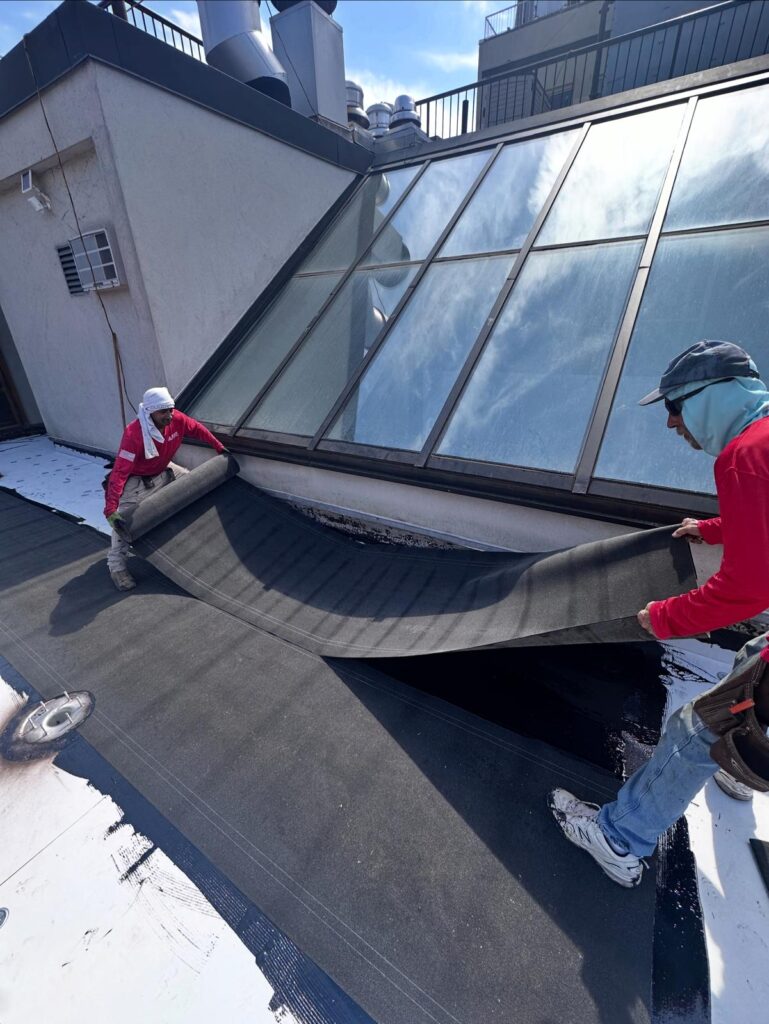
Reflective Roofing Materials for Commercial Properties
There is no single roofing material that works for every commercial building. Instead, the appropriate system depends on factors such as roof slope, existing materials, drainage, insulation, rooftop equipment, building use, budget, and long-term goals.
Elite Roofing Group lists several commercial roofing systems, including TPO, PVC, EPDM, SBS modified bitumen, silicone and acrylic coatings, and liquid-applied roofing systems.
Here is a practical comparison:
| Roofing System | Common Commercial Use | Reflective Potential | Key Consideration |
| TPO | Flat and low-slope roofs | Often available in reflective options | Seams and installation quality matter |
| PVC | Commercial low-slope roofing | Often available in reflective options | Suitable system selection is important |
| EPDM | Commercial flat roofing | Depends on membrane formulation | Durability and maintenance matter |
| SBS Modified Bitumen | Low-slope commercial buildings | Depends on surface and coating | Layered system requires proper installation |
| Silicone Coating | Suitable existing roof assemblies | Reflective coating option | Existing roof must be evaluated |
| Acrylic Coating | Suitable roof surfaces | Can provide reflective surface | Surface preparation is essential |
| Liquid-Applied Roofing | Various compatible applications | Depends on product | Professional application is important |
Consequently, property owners should evaluate the entire roofing assembly rather than selecting a system based solely on color or reflectivity.
TPO Roofing and Reflective Performance
TPO, or thermoplastic polyolefin, is a single-ply roofing membrane commonly used on commercial buildings. Reflective versions can provide a light-colored surface designed to reflect solar energy.
Therefore, TPO can be considered when a property owner wants a commercial roofing membrane with reflective characteristics.
However, successful performance depends on more than the membrane itself. Proper installation, seam work, flashing, drainage, insulation, penetrations, and ongoing maintenance all matter.
Elite Roofing Group lists TPO among its commercial roofing systems and provides commercial installation, maintenance, repair, and replacement services.
PVC Roofing for Commercial Buildings
PVC roofing is another single-ply membrane option used for commercial applications. Depending on the product selected, PVC membranes can provide reflective characteristics alongside resistance to various environmental conditions.
Moreover, PVC can be considered for buildings where a durable single-ply roofing system is appropriate.
Nevertheless, property owners should evaluate the complete roof design before selecting PVC. Roof size, penetrations, drainage, insulation, existing materials, and building requirements can all influence the appropriate specification.
EPDM and Reflective Commercial Roofing
EPDM is a rubber-based roofing membrane commonly associated with commercial flat and low-slope roofs. Traditional EPDM is often dark in color, although reflective options or compatible coating approaches may be considered depending on the roofing assembly.
Therefore, property owners interested in reflective performance should discuss the available system options with a qualified roofing professional.
Elite Roofing Group identifies EPDM as one of the commercial roofing systems it works with.
Reflective Roof Coatings for Existing Commercial Roofs
A complete roof replacement is not always the only option. In some situations, an existing roofing assembly may be suitable for a professionally applied reflective coating.
Roof coatings can potentially provide an additional protective surface while also changing the roof’s reflective characteristics.
However, coating is not appropriate for every roof. The existing membrane, moisture condition, adhesion, drainage, surface preparation, and overall roof integrity should be evaluated first.
Therefore, property owners should avoid applying a coating over an unsuitable or severely deteriorated roof without professional assessment.
Elite Roofing Group offers silicone and acrylic roof coatings as part of its commercial roofing solutions.
Silicone Roof Coatings
Silicone coatings are often considered for commercial roof restoration and maintenance applications. When the existing roof is compatible and properly prepared, a silicone coating can provide a protective surface with reflective characteristics.
Moreover, silicone systems may be considered when property owners want to extend the service life of a suitable existing roof rather than immediately replace the entire assembly.
However, preparation is critical. The existing surface should be evaluated, cleaned, repaired where necessary, and properly prepared before coating.
Consequently, a professional assessment should come before deciding whether a silicone coating is appropriate.
Acrylic Roof Coatings
Acrylic coatings can also provide a reflective surface when properly selected and applied. Therefore, they may be considered as part of a commercial roof restoration strategy.
Nevertheless, the existing roof must be compatible with the coating system. Additionally, moisture problems, damaged membranes, ponding water, and other underlying issues should be addressed before coating.
Otherwise, a new coating may simply cover an existing problem instead of solving it.
Liquid-Applied Roofing Systems
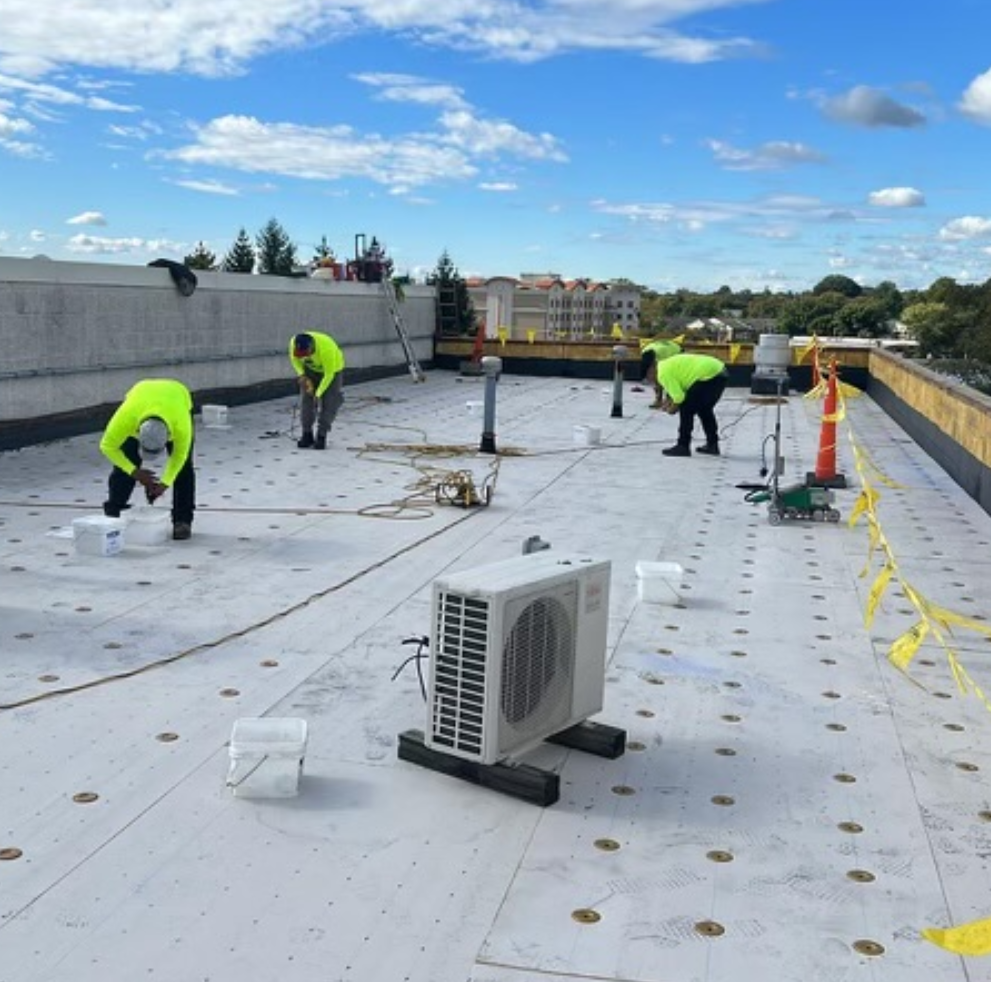
Liquid-applied roofing systems can provide another approach for certain commercial properties. These systems are applied directly to a prepared roof surface and can create a seamless protective layer when professionally installed.
Furthermore, liquid-applied systems can be useful around certain penetrations and complex roof details.
However, the existing roof must be evaluated before application. Therefore, professional preparation and installation remain essential to achieving the intended performance.
Reflective Roofing and Energy Efficiency
One of the biggest reasons property owners consider reflective roofing is energy performance.
A reflective roof can reduce solar heat absorption at the roof surface. Consequently, less heat may be transferred toward the building interior under certain conditions.
However, it is important to avoid treating reflective roofing as a guaranteed energy-cost solution. Actual results vary.
For instance, building orientation, insulation levels, HVAC efficiency, occupancy patterns, roof assembly, and local weather all influence energy consumption.
Therefore, reflective roofing should be viewed as one component of a broader building-efficiency strategy.
Reflective Roofing for Flat Commercial Roofs
Flat and low-slope roofs are common on commercial buildings. However, these roofs require careful attention to drainage, seams, penetrations, flashing, and surface condition.
Because water does not naturally run off a low-slope roof as quickly as it does from a steep roof, drainage design becomes particularly important.
Therefore, a reflective roof system should always be evaluated as a complete roofing assembly.
Elite Roofing Group provides commercial roof installation, maintenance, repair, and replacement services for commercial properties.
If a commercial property already has roofing problems, the company’s commercial roofing services can be used to explore available roofing solutions.
Roof Inspection Before Installing a Reflective System
A professional roof inspection is an important starting point.
Before installing a reflective membrane or coating, the existing roof should be evaluated for leaks, moisture, damaged materials, deteriorated flashing, drainage issues, and other concerns.
Furthermore, an inspection can help determine whether restoration or replacement is more appropriate.
Elite Roofing Group provides professional commercial roof inspection services to identify roofing concerns and help property owners understand the condition of their roof.
Consequently, an inspection can prevent property owners from investing in a reflective system without first addressing underlying damage.
Reflective Roofing and Roof Maintenance
Even a high-quality commercial roof requires regular maintenance. Therefore, installing a reflective roofing system should not be considered the final step.
Instead, property owners should monitor the roof periodically and address developing problems promptly.
Regular maintenance can include:
- Checking membrane condition
- Inspecting seams
- Examining flashing
- Checking drainage areas
- Looking for punctures
- Removing debris
- Checking rooftop equipment penetrations
- Identifying signs of water intrusion
- Reviewing previous repair areas
Moreover, proactive maintenance can help identify smaller concerns before they become more disruptive repairs.
Waterproofing and Reflective Roofing
Reflective characteristics and waterproofing serve different purposes, although they can work together within a complete roofing strategy.
A reflective surface addresses solar heat absorption, while waterproofing focuses on protecting the building from water intrusion.
Therefore, commercial property owners should consider both functions when evaluating their roofing system.
For properties experiencing leaks or moisture concerns, professional commercial roof waterproofing services can be part of a broader roof-protection strategy.
When Should a Commercial Roof Be Repaired?
Roof repair may be appropriate when damage is localized and the overall roofing system remains serviceable.
For example, isolated leaks, damaged flashing, small membrane problems, or limited surface deterioration may be repairable.
However, repeated leaks, widespread deterioration, extensive moisture damage, or an aging system may require a more comprehensive evaluation.
Therefore, property owners should avoid assuming that every roofing problem requires complete replacement.
Elite Roofing Group provides commercial roof repair services for roofing problems that require professional attention.
When Is Commercial Roof Replacement More Appropriate?
Sometimes repair is no longer the most practical option. If a roofing system has extensive deterioration, recurring problems, or widespread damage, replacement may provide a more appropriate long-term solution.
However, this decision should follow a professional evaluation.
A roofing assessment can consider:
- Overall roof age
- Existing membrane condition
- Moisture exposure
- Frequency of repairs
- Structural considerations
- Drainage
- Insulation
- Future building plans
- Long-term maintenance requirements
Consequently, the right choice depends on the actual condition of the roof and the property’s goals.
Reflective Commercial Roofing and Building Restoration
Roofing problems can sometimes affect other portions of the building envelope. Water intrusion, deteriorated exterior materials, and damaged flashing may create problems beyond the roof itself.
Therefore, commercial property owners may need to consider roofing and exterior restoration together.
Elite Roofing Group also provides exterior building restoration services for broader property restoration needs.
As a result, addressing connected building-envelope concerns can create a more comprehensive approach to property protection.
Why Choose Elite Roofing Group for Reflective Commercial Roofing?
Choosing a commercial roofing contractor involves more than selecting a roofing material. Instead, property owners should consider experience with commercial systems, installation practices, maintenance capabilities, communication, and the ability to evaluate the existing roof.
Elite Roofing Group describes itself as a family-owned roofing and home-improvement construction company serving NYC, Nassau County, and Suffolk County. The company states that it works with multiple roofing systems and is licensed, insured, and bonded.
Additionally, its commercial roofing service includes installation, maintenance, repair, and replacement. The company lists several commercial roofing systems, including TPO, PVC, EPDM, SBS modified bitumen, silicone and acrylic coatings, and liquid-applied systems.
Therefore, commercial property owners can discuss their building’s requirements and evaluate which roofing approach may be appropriate.
How to Choose the Right Reflective Roofing System
Every commercial building has different requirements. Therefore, selecting a reflective roofing system should begin with an evaluation rather than a simple material preference.
Consider these factors:
| Consideration | Why It Matters |
| Roof Type | Determines compatible roofing systems |
| Existing Membrane | Influences repair, coating, or replacement options |
| Drainage | Helps manage rainwater and prevent prolonged ponding |
| Insulation | Affects overall thermal performance |
| Rooftop Equipment | Creates penetrations and maintenance considerations |
| Roof Condition | Determines whether restoration or replacement is appropriate |
| Budget | Influences material and project options |
| Long-Term Goals | Helps determine the appropriate roofing strategy |
| Maintenance Plan | Supports long-term roof performance |
Furthermore, professional evaluation can help property owners balance immediate requirements with long-term building goals.
Steps to Get Reflective Commercial Roofing Services in Brooklyn
The process can begin with a professional roof inspection.
First, the roofing contractor evaluates the existing roof. Next, the condition of the membrane, flashing, drainage, insulation, and other relevant components can be considered.
Afterward, the contractor can discuss suitable roofing options. If a reflective coating is appropriate, the existing surface may require preparation and repairs before application.
Alternatively, if the roof requires replacement, a reflective membrane or another suitable roofing system may be considered.
Finally, the property owner can review the recommended scope, materials, project requirements, and maintenance considerations.
Therefore, a structured process helps reduce uncertainty before the project begins.
Get Reflective Commercial Roofing Services in Brooklyn, NY
A commercial roof is a major part of a building’s protection system. Therefore, selecting a suitable roofing approach can influence durability, maintenance, comfort, and long-term property performance.
Reflective roofing can help reduce solar heat absorption, and moreover, it can complement broader energy-conscious building strategies. However, the roofing system must be properly selected, installed, and maintained to perform as intended.
Elite Roofing Group provides commercial roofing services in Brooklyn and works with several roofing systems and coating options.
If you are looking for Reflective commercial roofing services in Brooklyn NY, you can contact Elite Roofing Group for a commercial roofing consultation and discuss the condition, goals, and requirements of your property.
Frequently Asked Questions About Reflective Commercial Roofing
What is reflective commercial roofing?
Reflective commercial roofing is a roofing system or surface designed to reflect more solar radiation and absorb less solar heat than a more heat-absorbing surface.
Can reflective roofing reduce cooling costs?
It can potentially reduce heat entering a building under suitable conditions. However, actual energy savings depend on factors such as insulation, HVAC efficiency, building design, roof assembly, occupancy, and climate.
What commercial roofing systems can have reflective properties?
Depending on the product and application, TPO, PVC, certain coatings, and other roofing systems can provide reflective characteristics. The appropriate option depends on the property and existing roof.
Is TPO a reflective commercial roofing option?
Many TPO products are available in light-colored or reflective formulations. However, product specifications should be reviewed before selecting a particular membrane.
Can an existing commercial roof receive a reflective coating?
Sometimes. However, the existing roof must be compatible with the coating, and its condition should be evaluated before application.

Are silicone roof coatings reflective?
Certain silicone roof coating products are designed to provide reflective surfaces. However, performance depends on the specific product, preparation, application, and existing roof assembly.
Does reflective roofing eliminate the need for roof maintenance?
No. Reflective roofing still requires inspection and maintenance. Therefore, property owners should continue monitoring seams, flashing, drainage, penetrations, and other components.
Should I repair or replace my commercial roof before adding a reflective coating?
That depends on the condition of the existing roof. Significant damage, moisture problems, or widespread deterioration may need to be addressed before coating is considered.
How often should a commercial roof be inspected?
Inspection frequency depends on the roofing system, building conditions, weather exposure, age, and maintenance requirements. Regular professional inspections can help identify problems earlier.
Does Elite Roofing Group provide commercial roofing in Brooklyn?
Yes. Elite Roofing Group lists commercial roofing installation, maintenance, repair, and replacement among its services and serves Brooklyn as part of its NYC service area.
Final Thoughts on Reflective Commercial Roofing Services in Brooklyn NY
Reflective commercial roofing can be a practical consideration for Brooklyn property owners looking to improve roof performance while managing solar heat absorption. Nevertheless, the right solution depends on the existing roof, building design, drainage, insulation, budget, and long-term property goals.
Therefore, property owners should begin with a professional evaluation rather than choosing a roofing system based solely on appearance or reflectivity.
Elite Roofing Group provides commercial roofing installation, maintenance, repair, replacement, and coating solutions in Brooklyn. The company works with TPO, PVC, EPDM, SBS modified bitumen, silicone and acrylic coatings, and liquid-applied roofing systems.
With proper planning, professional installation, regular inspections, and timely maintenance, a commercial roofing system can provide dependable protection while supporting the broader performance goals of the building.