Brooklyn’s buildings have unique architectural styles, from classic brownstones and residential townhouses to modern apartment complexes and commercial properties. However, regardless of a building’s design, its roof plays a critical role in protecting the structure from harsh weather, moisture, and everyday environmental damage. Therefore, choosing a professional Flat Roof Installation Service in Brooklyn, NY is an important investment for property owners who want dependable protection, lasting performance, and improved building value.
Flat roofs are particularly popular throughout Brooklyn because they offer practical functionality, efficient use of space, and a clean architectural appearance. Nevertheless, installing a flat roof requires careful planning, appropriate materials, and professional workmanship. Even a small installation mistake can eventually lead to water accumulation, insulation problems, or expensive structural repairs. Consequently, property owners should work with experienced roofing professionals who understand the demands of Brooklyn’s climate and building structures.
Elite Roofing Group provides roofing solutions designed to help property owners protect their investments. Whether you are planning a new flat roof installation, replacing an aging roofing system, or improving an existing commercial property, professional attention makes a significant difference. Moreover, a properly installed roofing system can improve energy efficiency, reduce maintenance concerns, and provide reliable protection throughout the year.
In this guide, we will explore flat roof installation, available roofing materials, installation considerations, maintenance strategies, and the benefits of hiring professional roofing contractors in Brooklyn, NY.
Why Flat Roof Installation Is a Smart Investment in Brooklyn, NY
Flat roofing systems are widely used across Brooklyn because they complement many residential and commercial building designs. Unlike traditional pitched roofs, flat roofs have a relatively low slope, which creates additional opportunities for practical outdoor and mechanical applications.
For example, property owners may use suitable flat roof areas for HVAC equipment, maintenance access, or rooftop installations. However, these applications must follow structural requirements and applicable building regulations.
Additionally, flat roofs offer several advantages that make them attractive for property improvements.
1. Efficient Use of Available Space
One of the biggest advantages of flat roofing is its practical design. Unlike steeply sloped roofs, flat roofs can provide accessible surface areas for approved rooftop equipment and other building requirements. Therefore, they are particularly useful for apartment buildings and commercial properties throughout Brooklyn.
2. Modern Architectural Appearance
Flat roofing creates a clean and streamlined appearance. Consequently, it works well with contemporary buildings, commercial spaces, and traditional urban properties that require a functional roofing solution.
3. Convenient Maintenance Access
Flat roofs are generally easier to access than steep roofs when appropriate safety measures are followed. As a result, professional inspections and routine maintenance can become more straightforward.
4. Potential Energy Efficiency Improvements
A properly designed flat roofing system can incorporate suitable insulation and reflective roofing materials. Therefore, it may help regulate indoor temperatures and reduce unnecessary heating and cooling demands.
5. Practical Long-Term Investment
Although installation costs vary depending on materials, roof condition, and project complexity, a professionally installed flat roof can provide dependable service for many years. Furthermore, timely maintenance helps protect the investment and reduce unexpected repair expenses.
Understanding Different Flat Roofing Materials
Selecting the right material is one of the most important decisions during a flat roof installation project. Different roofing systems offer different advantages, costs, maintenance requirements, and expected service lives.
Therefore, Elite Roofing Group can help property owners evaluate suitable roofing solutions according to their building requirements.
Here are some common flat roofing materials worth considering.
EPDM Roofing
EPDM, also known as ethylene propylene diene monomer, is a synthetic rubber roofing membrane commonly used on flat and low-slope roofs.
Its flexibility makes it suitable for buildings exposed to changing temperatures. Additionally, EPDM offers resistance to weathering and ultraviolet exposure.
Consequently, many property owners consider EPDM when looking for a practical and durable roofing solution.
TPO Roofing
Thermoplastic polyolefin, commonly called TPO, is another popular option for commercial and residential flat roofing applications.
TPO membranes typically feature reflective surfaces that can help reduce heat absorption. Moreover, heat-welded seams create strong connections when installed correctly.
Therefore, TPO can be an excellent choice for property owners seeking a modern roofing system with energy-conscious features.
Modified Bitumen Roofing
Modified bitumen is an asphalt-based roofing material designed for low-slope applications. It combines asphalt with modifiers that improve flexibility and performance.
Furthermore, modified bitumen roofing systems can provide dependable waterproofing when installed using the appropriate application method.
Built-Up Roofing (BUR)
Built-up roofing consists of multiple layers of bitumen and reinforcing materials, typically finished with a protective surface.
Because of its layered construction, BUR can offer substantial protection against moisture and everyday environmental exposure. However, installation requires careful attention to structural capacity and application requirements.
Flat Roofing Material Comparison Table
Choosing the right roofing material becomes easier when property owners understand the basic differences between available systems.
| Roofing Material | Key Advantage | Common Application | Important Consideration |
| EPDM | Flexible rubber membrane | Residential and commercial roofs | Seam quality and membrane protection |
| TPO | Reflective surface | Commercial and residential buildings | Proper seam welding |
| Modified Bitumen | Multi-layer waterproofing | Low-slope roofs | Installation technique |
| Built-Up Roofing | Multiple protective layers | Commercial properties | Structural weight and maintenance |
Ultimately, the best material depends on your building’s design, existing roof condition, drainage requirements, budget, and long-term expectations.
Our Professional Flat Roof Installation Process
A successful roofing project requires more than simply placing a new membrane over an existing surface. Instead, professional installation involves several carefully coordinated stages.
Elite Roofing Group understands the importance of proper preparation, material selection, and installation quality. Therefore, every roofing project should begin with an evaluation of the property’s specific requirements.
Step 1: Initial Roof Inspection
First, roofing professionals assess the existing roof structure. During this stage, they look for visible damage, water intrusion, deteriorating materials, drainage concerns, and possible structural weaknesses.
Additionally, a detailed inspection helps determine whether the property requires a complete roof replacement or whether certain existing components can remain.
Property owners can also explore professional roof inspection services to better understand their roofing system’s condition.
Step 2: Roof Preparation
Next, the installation team prepares the roof surface. Depending on the property’s condition, this may involve removing existing roofing materials, clearing debris, repairing damaged sections, and preparing the substrate.
Importantly, proper preparation creates a suitable foundation for the new roofing system.
Step 3: Structural and Drainage Assessment
Although flat roofs appear level, they must incorporate appropriate slope and drainage provisions.
Therefore, contractors evaluate drains, scuppers, and other water-management components. Without proper drainage, standing water can increase the likelihood of membrane deterioration and leaks.
Step 4: Insulation Installation
After preparing the surface, suitable insulation may be installed according to the roofing system’s design.
Proper insulation helps regulate indoor temperatures. Furthermore, it can improve the building’s overall energy performance when correctly selected and installed.
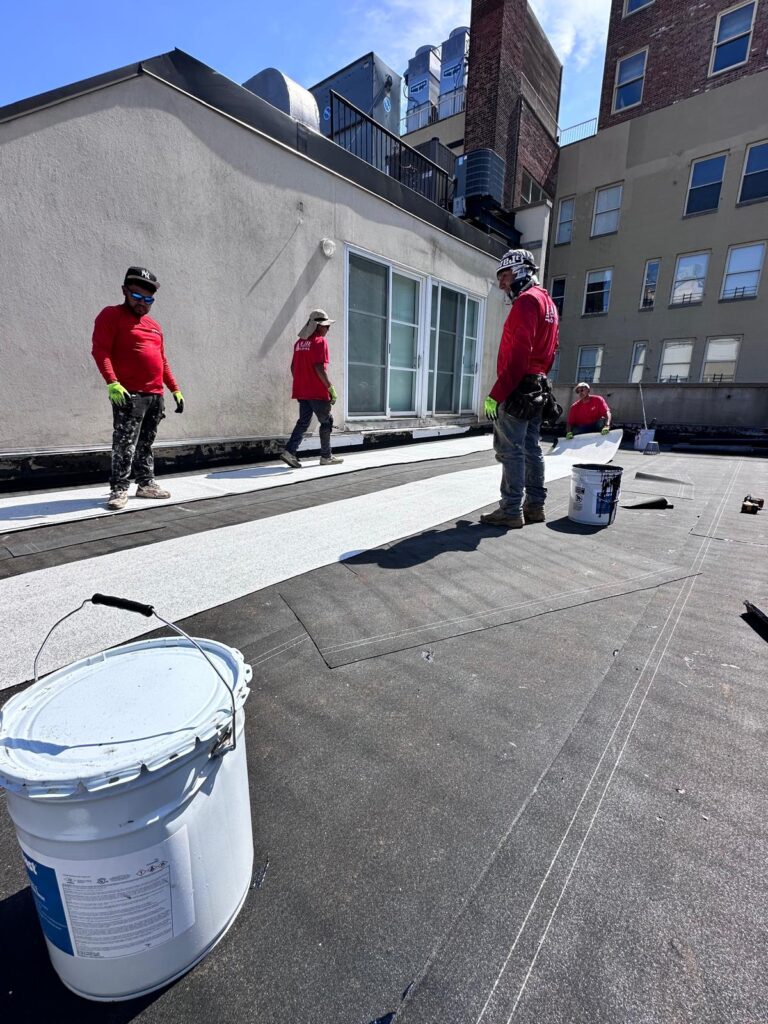
Step 5: Roofing Membrane Installation
Once the preparation work is complete, contractors install the selected roofing membrane.
Depending on the material, the installation may involve mechanical fastening, adhesive application, or heat-welded seams.
Consequently, professional installation techniques are essential for maintaining membrane integrity and preventing potential water intrusion.
Step 6: Flashing and Waterproofing
Next, contractors address roof edges, penetrations, vents, drains, and other vulnerable areas.
These details are especially important because improperly sealed transitions can become common sources of leaks.
For additional protection, property owners can explore professional roof waterproofing solutions.
Step 7: Final Inspection
Finally, the completed roofing system should undergo a thorough quality inspection.
Contractors review seams, flashing, drainage components, membrane attachment, and other installation details. As a result, potential problems can be identified before the project is considered complete.
Why Brooklyn Property Owners Need Reliable Flat Roofing
Brooklyn experiences different weather conditions throughout the year. From freezing winter temperatures and snow to heavy rainfall, summer heat, and strong winds, roofing systems must handle considerable environmental stress.
Consequently, installing a suitable flat roof requires careful consideration of local weather conditions.
Protection Against Heavy Rainfall
Rainwater management is especially important for flat roofing systems. Although properly designed roofs include drainage slopes, clogged drains and poorly installed membranes can contribute to water accumulation.
Therefore, professional installation and regular maintenance are essential for reducing moisture-related problems.
Performance During Winter
During winter, snow and ice can place additional demands on roofing systems. Furthermore, repeated freezing and thawing may affect vulnerable seams, flashing, and drainage components.
For this reason, roofing materials should be selected and installed according to the property’s specific conditions.
Resistance to Summer Heat
Brooklyn summers can expose roofing materials to prolonged sunlight and elevated temperatures. Consequently, suitable membrane selection, insulation, and ventilation considerations can help improve roofing performance.
Wind Protection
Strong winds can damage poorly secured roofing components. Therefore, correct fastening, edge detailing, and membrane installation are important considerations for long-term reliability.
Residential Flat Roof Installation for Brooklyn Homes
Residential buildings require roofing solutions that protect families, preserve structural integrity, and support everyday comfort.
For example, many Brooklyn townhouses and apartment buildings feature flat or low-slope roofing systems. However, each property has different structural characteristics and installation requirements.
A professional residential roofing project should consider insulation, drainage, waterproofing, ventilation, and the overall condition of the existing roof.
Additionally, homeowners should pay attention to early warning signs such as interior ceiling stains, peeling paint, damp walls, and recurring moisture problems.
Elite Roofing Group provides residential roofing solutions designed around individual property requirements. Explore residential roofing services in Brooklyn for more information about protecting your home.
Commercial Flat Roof Installation for Businesses
Commercial buildings often have larger roofing surfaces and more complicated equipment requirements. Therefore, their roofing systems require careful planning and appropriate material selection.
Restaurants, retail buildings, warehouses, office spaces, and apartment complexes may all benefit from professionally installed flat roofing systems.
Moreover, commercial roof installation should consider business operations, equipment placement, drainage performance, and long-term maintenance.
A properly planned roofing project can help reduce the risk of operational interruptions caused by leaks and preventable roofing problems.
For businesses planning a roofing upgrade, explore commercial roofing services from Elite Roofing Group.
Common Flat Roof Problems and How Professional Installation Helps Prevent Them
Even durable roofing materials can experience problems when installation quality is poor or maintenance is neglected.
However, understanding common roofing issues helps property owners take preventive action.
| Common Roofing Problem | Possible Cause | Recommended Solution |
| Water pooling | Poor drainage or inadequate slope | Drainage assessment and correction |
| Roof leaks | Damaged seams or flashing | Professional leak inspection and repair |
| Membrane damage | Weather exposure or physical impact | Membrane repair or replacement |
| Interior moisture | Roof penetration or waterproofing failure | Identify and seal the source |
| Insulation deterioration | Prolonged moisture exposure | Evaluate and replace damaged insulation |
| Loose roof edges | Improper attachment or wind damage | Secure and restore roof edge details |
Nevertheless, identifying the actual source of a roofing problem is essential before choosing a repair method.
For example, a ceiling stain does not always indicate that the leak is directly above the affected area. Water can travel along roof components before becoming visible indoors.
Therefore, professional diagnosis can help prevent unnecessary repairs.
Frequently Asked Questions About Flat Roof Installation in Brooklyn, NY
1. How much does flat roof installation cost in Brooklyn, NY?
The cost depends on several factors, including roof size, material selection, insulation requirements, existing roof conditions, labor, and project complexity. Additionally, drainage improvements and structural repairs may affect the total investment. The best approach is to request a property-specific estimate.
2. What is the best material for a flat roof?
EPDM, TPO, modified bitumen, and built-up roofing are common options. However, the best material depends on the building’s requirements, budget, exposure to weather, and maintenance expectations. A professional roofing assessment can help determine the most suitable option.
3. How long does a flat roof installation take?
Project timelines depend on roof dimensions, weather conditions, material availability, and preparation requirements. Smaller projects may take less time, whereas larger commercial installations can require several days or longer.
4. Can a new flat roof be installed over an existing roof?
In some situations, an additional roofing layer may be permitted. However, contractors must first evaluate the existing roof, structural capacity, moisture conditions, and applicable building requirements. If the existing system is extensively damaged or saturated, removal may be necessary.
5. How do I know if my flat roof needs replacement?
Recurring leaks, widespread membrane deterioration, persistent water accumulation, damaged insulation, and repeated repair requirements may indicate that replacement is worth considering. Nevertheless, a professional inspection is necessary to determine the appropriate solution.
6. Are flat roofs completely waterproof?
No roofing system is completely maintenance-free or immune to damage. However, a properly installed flat roofing system with suitable membranes, flashing, and drainage can provide excellent moisture protection.
7. How often should a flat roof be inspected?
At least twice-yearly inspections are a useful maintenance practice for many properties. Additionally, inspections after significant storms can help identify damage before it becomes more serious.
8. Can flat roofing improve energy efficiency?
Yes. Appropriate insulation and reflective roofing materials may help reduce heat transfer and improve indoor temperature control. However, actual energy savings depend on the building’s design and existing insulation.
The Importance of Flat Roof Maintenance After Installation
Installing a new flat roof is an important investment. However, maintaining that investment is equally important.
Even high-quality roofing materials require periodic attention because weather exposure, debris, and ordinary building movement can gradually affect their performance.
Therefore, property owners should establish a consistent maintenance routine.
Keep Roof Drains Clear
First, remove leaves, dirt, and debris from drainage areas. Blocked drains can prevent water from leaving the roof efficiently.
Inspect Flashing and Seams
Next, examine vulnerable areas around vents, skylights, walls, and roof penetrations. Small openings can eventually become significant leak sources.
Address Minor Damage Quickly
Furthermore, do not ignore small membrane tears, loose flashing, or early signs of moisture intrusion. Timely repairs can help prevent more extensive damage.
For professional assistance, explore roof repair services from Elite Roofing Group.
Schedule Professional Inspections
Although property owners can perform basic visual checks from safe locations, professional inspections provide a more comprehensive assessment.
Additionally, regular evaluations help identify potential issues before they require major restoration work.
Why Choose Elite Roofing Group for Flat Roof Installation in Brooklyn, NY?
Selecting the right roofing contractor is one of the most important parts of any installation project. After all, the quality of the workmanship directly affects how effectively the roofing system performs.
Elite Roofing Group focuses on roofing and exterior solutions designed to address the needs of residential and commercial properties.
Here are several important considerations when choosing a professional roofing partner.
Property-Specific Roofing Solutions
Every building has different requirements. Therefore, roofing recommendations should consider roof dimensions, structural conditions, drainage, insulation, and the owner’s priorities.
Attention to Installation Details
Proper membrane attachment, flashing, drainage, and waterproofing all contribute to roofing performance. Consequently, attention to these details is essential during installation.
Residential and Commercial Experience
Different properties require different roofing approaches. Residential townhouses, apartment buildings, and commercial facilities may have significantly different structural and operational requirements.
Roofing and Exterior Restoration Support
In addition to roofing installation and repairs, property owners may need exterior improvements to protect their buildings.
For example, exterior building restoration services can address exterior conditions that affect the building’s appearance and protection.
Likewise, property owners with sloped roofing sections can explore shingle roof repair and replacement solutions.
Ultimately, working with a qualified roofing professional helps property owners make informed decisions and develop a practical long-term maintenance strategy.
Upgrade Your Property With Professional Flat Roof Installation
A reliable flat roofing system is essential for protecting your building against moisture, weather exposure, and everyday environmental challenges. However, achieving dependable performance requires the right materials, proper installation techniques, and consistent maintenance.
Whether you own a residential townhouse, manage an apartment building, or operate a commercial property, investing in professional Flat Roof Installation Service in Brooklyn, NY can help protect your property’s value and improve its long-term functionality.
From selecting EPDM and TPO membranes to improving insulation, drainage, and waterproofing, every installation decision matters. Furthermore, addressing potential roofing problems early can help prevent costly damage and unnecessary disruptions.
Elite Roofing Group is ready to help property owners explore suitable roofing solutions based on their building’s requirements.
CONTACT US – Schedule Your Flat Roof Installation Consultation Today!
Are you planning a new flat roof installation or considering replacing an aging roofing system in Brooklyn, NY? Do you need professional guidance regarding roofing materials, drainage improvements, or long-term roof protection?
Then, take the next step toward protecting your property.
Contact Elite Roofing Group to discuss your roofing requirements, request project information, and explore a suitable solution for your residential or commercial building.
Visit Elite Roofing Group’s Contact Page to get in touch and take the first step toward a durable, professionally installed flat roofing system.
Elite Roofing Group – Professional Roofing Solutions for Brooklyn Properties.