A flat roof offers practical advantages for residential and commercial properties. It provides usable rooftop space, supports different building designs, and can accommodate HVAC equipment and other essential installations. However, unlike sloped roofs, flat roofs depend heavily on properly designed drainage systems to move rainwater away from the surface. Without effective drainage, standing water can create serious problems, including roof leaks, membrane deterioration, structural stress, and costly interior damage.For property owners, investing in reliable flat roof drainage systems in Brooklyn, NY is an important step toward protecting a building. Although a flat roof may appear nearly level, it should have carefully planned slopes, drainage outlets, and water-management components. Consequently, even a small drainage problem can affect the roof’s overall performance.
Brooklyn properties experience changing weather conditions throughout the year. Heavy rain, seasonal storms, melting snow, falling leaves, and accumulated debris can all interfere with rooftop drainage. Therefore, property owners should understand how their drainage systems work and why regular maintenance matters.
Elite Roofing Group understands the importance of maintaining a dependable roofing system. Whether you own a residential property, manage a commercial building, or oversee exterior improvements, proper roof drainage deserves attention. With suitable planning, professional inspections, and timely repairs, you can help prevent water accumulation and protect your investment.
What Are Flat Roof Drainage Systems?
Flat roof drainage systems are designed to collect and direct rainwater away from a roof’s surface. Although these roofs are called flat, they typically include a slight slope that guides water toward designated drainage points.
Unlike steeply pitched roofs, which allow gravity to move water toward gutters and downspouts, flat roofs require a more carefully coordinated drainage arrangement. For example, internal drains, scuppers, gutters, and downspouts may work together to carry water safely away from the building.
A properly functioning system helps prevent water from remaining on the roof for extended periods. Furthermore, it reduces the likelihood of leaks, deterioration, and damage to roofing materials.
The main components of a typical flat roof drainage system include:
- Roof slope: Creates the necessary gradient for water movement.
- Internal roof drains: Collect water from designated low points.
- Scuppers: Openings that allow water to pass through a parapet wall.
- Gutters: Collect and channel water along the roof’s edges.
- Downspouts: Carry collected water toward an appropriate discharge location.
- Drain strainers: Help prevent leaves and larger debris from entering drainage outlets.
- Waterproofing materials: Protect the roof structure from moisture penetration.
When these components function together, they help maintain effective water management and support the roof’s long-term performance.
Why Flat Roof Drainage Is Especially Important for Brooklyn Properties
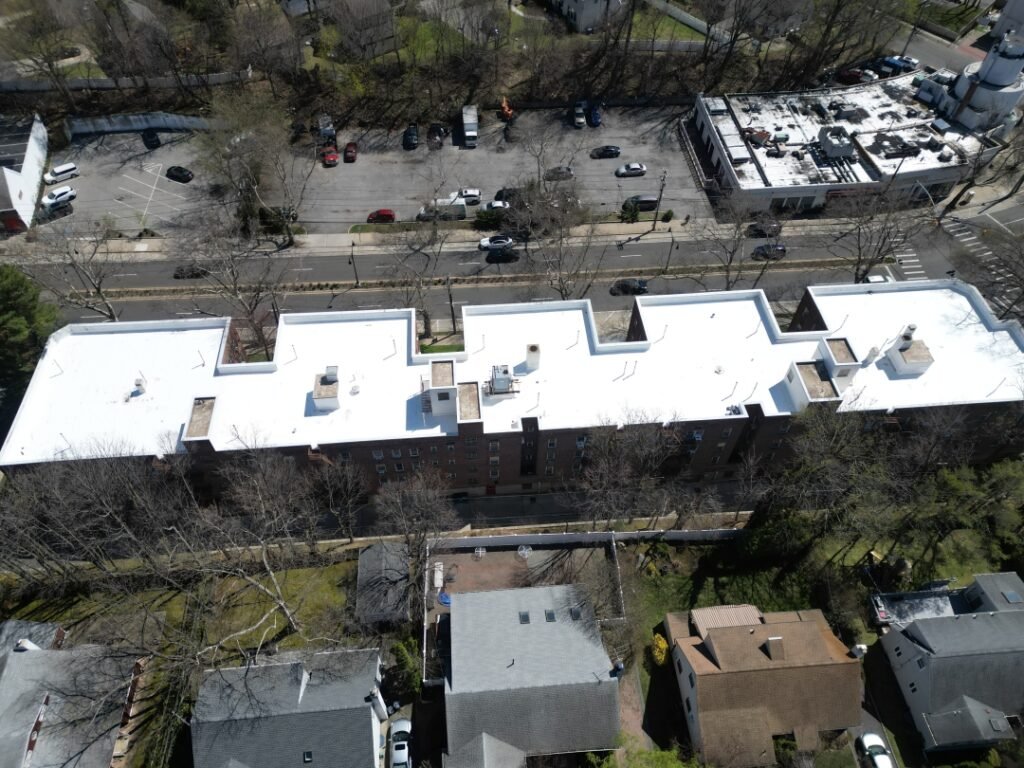
Brooklyn has a diverse building landscape, including apartment buildings, brownstones, commercial properties, warehouses, and mixed-use developments. Many of these structures feature flat or low-slope roofing systems.
However, rooftop drainage requirements can vary considerably depending on the building’s age, design, roof dimensions, and existing drainage arrangement. Therefore, a solution that works for one property may not be suitable for another.
Several local conditions make proper drainage especially important.
Heavy Rainfall and Seasonal Storms
During periods of heavy rainfall, a drainage system must move water efficiently. If drains become blocked or outlets are undersized, water may collect on the roof. Consequently, prolonged ponding can increase the risk of leaks and material deterioration.
Snow and Melting Ice
Winter weather creates additional drainage challenges. Snow may accumulate on a flat roof and later melt, producing substantial amounts of water. If outlets are blocked by ice or debris, drainage can become restricted.
Falling Leaves and Rooftop Debris
Leaves, dirt, branches, and other debris can collect around drains and scuppers. As a result, water may struggle to reach the drainage outlets.
Older Building Designs
Some older Brooklyn buildings have drainage layouts that require closer inspection. Over time, roofing materials, drain connections, and waterproofing details may deteriorate. Therefore, evaluating the entire drainage arrangement is important before deciding on repairs or improvements.
Common Types of Flat Roof Drainage Systems
Choosing the right drainage arrangement depends on the roof’s layout, structural design, and water-management requirements. Moreover, some buildings may use a combination of drainage methods to handle different roof areas.
Internal Roof Drainage Systems
Internal drainage systems collect rainwater through drains installed within the roof surface. The water then travels through connected piping toward an approved discharge point.
These systems are often used on larger buildings and properties with parapet walls. Because the drainage pipes are generally routed through the building, the roof’s outer appearance can remain relatively uncluttered.
However, internal drains need regular inspection. If a drain becomes blocked, water may accumulate around the affected area. Therefore, drain strainers should remain clear, and the connected drainage components should be maintained.
Scupper Drainage Systems
Scuppers are openings installed through the edge of a roof or parapet wall. They allow accumulated water to escape from the rooftop and flow toward an appropriate discharge location.
These components can be useful for buildings with parapet walls. Additionally, they may serve as primary drainage outlets or emergency overflow points, depending on the roof design.
Nevertheless, scuppers must remain unobstructed. Leaves, dirt, and other materials can restrict water movement and reduce drainage performance.
Gutter and Downspout Systems
Some flat roofs use perimeter gutters and downspouts to collect and redirect rainwater. Gutters receive water from the roof edge, while downspouts carry it downward.
This arrangement can help manage runoff on suitable building designs. However, the gutters must have appropriate capacity and slope. Otherwise, water may overflow or collect in low areas.
Combination Drainage Systems
Certain properties benefit from combining multiple drainage methods. For instance, a building may use internal drains for regular water removal and scuppers as additional overflow outlets.
This approach can provide an extra layer of protection when properly designed. However, the arrangement should account for roof dimensions, building structure, drainage capacity, and applicable requirements.
Signs Your Flat Roof Drainage System Needs Attention
Drainage problems do not always become obvious immediately. Nevertheless, recognizing early warning signs can help property owners address issues before they cause extensive damage.
Here are some common indicators that your roof may need professional attention.
1. Standing Water on the Roof
Small amounts of temporary water after rainfall may occur on some flat roofs. However, water that remains for extended periods can indicate inadequate drainage, poor slope, or blocked outlets.
2. Water Stains on Interior Ceilings
Brown or yellow ceiling stains may indicate moisture entering through the roofing system. Although the leak may not be directly below the drainage problem, a professional inspection can help identify its source.
3. Blocked Roof Drains
Visible debris around drainage outlets can restrict water movement. Therefore, drains should be checked regularly, especially after storms and during fall.
4. Overflowing Gutters or Scuppers
When water spills over drainage components, the system may be obstructed, incorrectly sized, or unable to handle the current water volume.
5. Blistering or Deteriorating Roofing Materials
Persistent moisture can contribute to deterioration in some roofing assemblies. Consequently, bubbling, separation, or damaged membrane areas should receive professional attention.
6. Unpleasant Odors or Damp Interior Areas
Moisture trapped within a building can contribute to damp conditions and musty odors. Therefore, unexplained moisture should not be ignored.
If you notice these warning signs, consider arranging professional roof inspection services to evaluate the condition of the roof and identify potential drainage concerns.
How Proper Roof Slope Improves Water Drainage
A flat roof should not be completely level. Instead, it generally needs an appropriate slope that directs rainwater toward drains, scuppers, or perimeter outlets.
Without sufficient slope, water may collect in low areas. Furthermore, existing depressions can become more noticeable as roofing materials age or building conditions change.
There are several ways a roof’s slope may be established or improved:
- Tapered insulation: Specially shaped insulation boards create a gradual slope toward drainage outlets.
- Structural slope: The roof structure itself may be designed with a suitable gradient.
- Cricket installation: A cricket is a raised, sloped feature that redirects water around obstructions or toward drains.
- Drainage layout improvements: Adjusting the location or arrangement of drainage points may help address persistent water accumulation.
However, the appropriate solution depends on the building’s structural capacity and existing roof assembly. Therefore, a qualified roofing professional should assess the roof before recommending modifications.
Benefits of Installing and Maintaining Effective Flat Roof Drainage Systems
A properly designed drainage system offers several important benefits for property owners.
| Benefit | How It Helps Your Property |
| Reduced water accumulation | Helps prevent prolonged ponding after rainfall |
| Better leak prevention | Reduces opportunities for standing water to affect vulnerable roof areas |
| Longer roofing-system service life | Helps limit moisture-related deterioration |
| Improved building protection | Helps protect ceilings, walls, insulation, and interior finishes |
| Better stormwater management | Directs runoff toward appropriate drainage outlets |
| Easier maintenance | Provides a clear arrangement for inspecting and cleaning drainage components |
| Potentially lower repair expenses | Early maintenance may prevent some more extensive damage |
Although drainage improvements require an investment, they can help reduce the likelihood of avoidable roofing problems. Moreover, regular maintenance supports the performance of the entire roofing assembly.
Flat Roof Drainage Problems That Can Lead to Expensive Repairs
When drainage issues remain unresolved, the resulting damage may extend beyond the roof itself.
Roof Membrane Damage
Standing water can contribute to deterioration in vulnerable roofing areas. Additionally, existing cracks, punctures, and weak seams may become more problematic when water remains on the surface.
Interior Water Leaks
If moisture penetrates the roofing system, it may affect ceilings, insulation, walls, and other interior materials. As a result, repairs may involve more than the roof alone.
Insulation Problems
Water entering the roof assembly can affect insulation performance. Wet insulation may lose effectiveness and require professional evaluation or replacement.
Structural Concerns
Ponding water adds weight to a roof. If excessive accumulation occurs, it may place additional stress on the structure. Therefore, serious or recurring ponding should be evaluated promptly.
Damage Around Roof Openings
Drainage problems may also affect roof penetrations, flashing, and other vulnerable details. Proper waterproofing and careful installation are therefore essential.
For buildings with existing roofing damage, professional roof repair services can help identify the affected areas and determine suitable corrective work.
Commercial and Residential Flat Roof Drainage Solutions
Different buildings have different drainage needs. Therefore, a successful drainage plan should consider the property’s purpose, roof size, building layout, and existing roofing materials.
Flat Roof Drainage for Residential Properties
Residential flat roofs require dependable drainage to protect living spaces and household belongings. Water entering through the roof can damage ceilings, insulation, flooring, and personal property.
Additionally, residential buildings may have rooftop equipment, access structures, and other features that affect water movement.
Homeowners should arrange periodic inspections and address blocked drains or damaged roofing components promptly. Elite Roofing Group provides residential roofing services for property owners looking to maintain and protect their roofing systems.
Flat Roof Drainage for Commercial Buildings
Commercial properties often have larger roof areas and more complex drainage requirements. Warehouses, offices, apartment buildings, and retail facilities may also contain HVAC equipment, ventilation systems, and rooftop access structures.
Consequently, commercial drainage planning must account for multiple roof sections and potential water collection points.
A dependable drainage arrangement helps protect the building and supports ongoing business operations. Property managers can explore commercial roofing services when evaluating their roofing needs.
The Importance of Waterproofing in Flat Roof Drainage Systems
Drainage and waterproofing work together. Although drainage removes water from the roof, waterproofing helps prevent moisture from entering the building.
Even an effective drainage arrangement cannot fully protect a roof if its membrane, seams, flashing, or penetrations are damaged.
For example, water may enter through poorly sealed joints or deteriorated flashing. Similarly, moisture may penetrate areas where roofing materials have separated.
Therefore, property owners should evaluate drainage and waterproofing as connected parts of the same roofing system.
Professional roof waterproofing solutions can help address vulnerable areas and support better moisture protection.
How to Maintain Flat Roof Drainage Systems Throughout the Year
Regular maintenance is one of the most practical ways to support reliable drainage. Instead of waiting for a leak to appear, property owners should establish a routine inspection and cleaning schedule.
Spring Maintenance
After winter, inspect the roof for accumulated debris, damaged drainage components, and signs of moisture intrusion. Additionally, check whether snow and ice have affected drains or flashing.
Summer Maintenance
Inspect the roof after periods of heavy rain. Look for standing water, membrane deterioration, and loose or damaged drainage components.
Fall Maintenance
Falling leaves can quickly block drains, scuppers, and gutters. Therefore, clear debris regularly and check that water can reach the outlets.
Winter Maintenance
Monitor drainage conditions during cold weather. Ice can obstruct outlets, while snow accumulation may create additional water-management concerns as temperatures change.
For all seasons, avoid walking on a roof without appropriate safety measures. Furthermore, repairs involving roof membranes, drains, and structural components should be handled by qualified professionals.
How Elite Roofing Group Can Help Protect Your Brooklyn Property
A reliable roof requires more than quality roofing materials. It also depends on proper drainage, effective waterproofing, and regular maintenance.
Elite Roofing Group offers roofing-related services that can help property owners address different building needs. Whether a roof requires an inspection, repair, waterproofing, or broader exterior improvements, identifying the problem is an important first step.
For example, damaged exterior surfaces and vulnerable building details may contribute to moisture problems. Consequently, evaluating the entire building envelope can help uncover concerns that extend beyond the roof surface.
Property owners can also explore exterior building restoration services when considering improvements to their building’s exterior condition.
Additionally, buildings with different roofing materials may require specialized attention. For properties with shingle roofing, Elite Roofing Group provides information about shingle roof repair and replacement.
The best approach is to discuss the property’s specific condition and determine which services are appropriate.
When Should You Upgrade Your Flat Roof Drainage System?
Not every drainage problem requires a complete system upgrade. In many situations, cleaning a blocked drain, repairing a damaged outlet, or correcting a localized roofing issue may be sufficient.
However, an upgrade may be worth considering when:
- Water repeatedly accumulates in the same roof areas.
- Existing drains cannot adequately handle runoff.
- Drainage components are severely damaged or deteriorated.
- The roof has undergone renovations that changed its layout.
- Existing outlets are poorly positioned.
- Recurring leaks suggest that the current water-management arrangement needs improvement.
Furthermore, changes to drainage capacity or roof slope should be evaluated in relation to applicable building requirements and the structure’s design.
A professional assessment can help determine whether repairs, improvements, or a more comprehensive drainage redesign is the most practical option.
Frequently Asked Questions About Flat Roof Drainage Systems in Brooklyn, NY
1. What is the purpose of a flat roof drainage system?
A flat roof drainage system collects rainwater and directs it away from the roof. It helps prevent prolonged water accumulation, reduces moisture-related risks, and protects the roofing assembly.
2. Do flat roofs need a slope for proper drainage?
Yes. Although a flat roof may look level, it generally needs a slight slope to guide water toward drains, scuppers, or gutters. Without appropriate slope, water may collect in low areas.
3. What are the most common types of flat roof drainage systems?
Common options include internal roof drains, scuppers, perimeter gutters, and downspouts. Some properties also use a combination of drainage methods based on their roof design.
4. How often should flat roof drains be cleaned?
Cleaning frequency depends on the roof’s surroundings, debris levels, and drainage design. However, property owners should inspect drains regularly and check them after major storms or periods of heavy leaf accumulation.
5. Is standing water on a flat roof always a problem?
Not every temporary puddle indicates a serious issue. Nevertheless, water that remains for an extended period may indicate poor drainage, blocked outlets, or inadequate slope. A professional inspection can help determine the cause.
6. Can blocked roof drains cause leaks?
Yes. Blocked drains can allow water to accumulate, increasing the risk of moisture reaching vulnerable roof areas. Therefore, drainage outlets should remain clear and functional.
7. What is the difference between a roof drain and a scupper?
A roof drain is generally installed within the roof surface and connects to a drainage pipe. In contrast, a scupper is an opening through a roof edge or parapet wall that allows water to escape.
8. Can flat roof drainage systems be upgraded?
Yes. Depending on the roof’s design, upgrades may involve improving drainage outlets, adding suitable drainage components, correcting slope, or addressing recurring obstructions. A professional assessment is necessary before selecting an upgrade.
9. Why is waterproofing important for flat roofs?
Waterproofing protects the roof assembly from moisture penetration. Although drainage removes water from the surface, waterproofing helps prevent leaks through seams, flashing, and other vulnerable areas.
10. Does commercial flat roof drainage require special planning?
Commercial roofs may have larger surface areas, rooftop equipment, and more complicated layouts. Therefore, drainage planning should consider roof dimensions, water flow, building design, and applicable requirements.
11. When should I schedule a flat roof inspection?
Schedule an inspection if you notice standing water, leaks, damaged membranes, blocked drains, or unusual moisture inside the building. Regular inspections can also help identify developing problems before they become more expensive.
12. Who can I contact about flat roof drainage systems in Brooklyn, NY?
Property owners can contact Elite Roofing Group to discuss roofing concerns, inspection needs, and available services. Visit the Elite Roofing Group contact page to request more information.
Conclusion: Protect Your Property With Reliable Flat Roof Drainage Systems
Effective drainage is essential for maintaining a flat roof. Without proper water management, rainwater, melting snow, and accumulated debris can create conditions that contribute to leaks, roofing deterioration, and interior damage.
Fortunately, property owners can reduce these risks through suitable drainage planning, routine inspections, timely repairs, and dependable waterproofing.
Whether you manage a residential building or a commercial property, understanding your roof’s drainage arrangement can help you make better maintenance decisions. Moreover, addressing minor problems early may prevent more complicated repairs later.
If you are searching for dependable flat roof drainage systems in Brooklyn, NY, Elite Roofing Group can be a starting point for discussing your roofing needs. Contact the team to learn more about roof inspections, repairs, waterproofing, and other roofing services that can help protect your property.