
A leaking flat roof can quickly become a serious concern for homeowners, landlords, property managers, and commercial building owners in Brooklyn, NY. What begins as a small water stain on the ceiling can eventually lead to damaged insulation, peeling paint, mold growth, and costly structural repairs. Therefore, identifying the source of a leak and arranging the right repair as soon as possible is essential for protecting your property.When searching for the best flat roof leak repair in Brooklyn, NY, property owners need more than a temporary patch. Instead, they need a practical solution that addresses the underlying problem, withstands local weather conditions, and helps prevent recurring water intrusion.
Elite Roofing Group helps property owners explore roofing solutions based on their building’s needs. Whether your flat roof has developed a leak around a drain, flashing, seam, or rooftop penetration, understanding the causes and repair options can help you make a more informed decision.
Furthermore, Brooklyn’s changing weather makes roof maintenance particularly important. Heavy rain, winter snow, freezing temperatures, and seasonal temperature changes can place stress on roofing materials. Consequently, even a roof that appears to be in good condition may develop weak spots over time.
In this guide, we explain the common causes of flat roof leaks, the professional repair process, factors that influence costs, preventive maintenance tips, and frequently asked questions. By the end, you will have a clearer understanding of how to protect your Brooklyn property from roof leaks.
Best Flat Roof Leak Repair in Brooklyn, NY: Expert Solutions for Lasting Roof Protection | Brooklyn NY | Elite Roofing Group NY
Flat roofs are common throughout Brooklyn, particularly on apartment buildings, commercial properties, townhouses, and other urban structures. Although these roofs are often practical for buildings with limited space, they require suitable drainage and regular maintenance.
Unlike steeply sloped roofs, flat roofing systems depend on carefully designed drainage pathways to move water toward drains and roof edges. Therefore, when a drain becomes blocked or the roofing membrane deteriorates, water may remain on the surface longer than intended.
Over time, standing water can expose weak seams, damaged flashing, and deteriorated roofing materials. Additionally, repeated moisture exposure may allow water to enter the building through small openings that are difficult to notice from inside.
Prompt repairs offer several important benefits:
- Reduced water damage: Addressing leaks early can help limit damage to ceilings, walls, insulation, and interior finishes.
- Better building protection: Repairing vulnerable roof areas helps protect the underlying structure from continued moisture exposure.
- Lower long-term expenses: Small repairs may prevent more extensive damage, although the outcome depends on the roof’s overall condition.
- Improved indoor comfort: A properly functioning roof helps keep unwanted water out of living and working spaces.
- Longer roof service life: Appropriate maintenance and timely repairs may help roofing materials perform more reliably.
Most importantly, a visible leak should not be ignored simply because the water appears to be entering through a small area. Water can travel along roofing layers or structural components before becoming visible indoors. As a result, the location of a ceiling stain does not always identify the actual source of the leak.
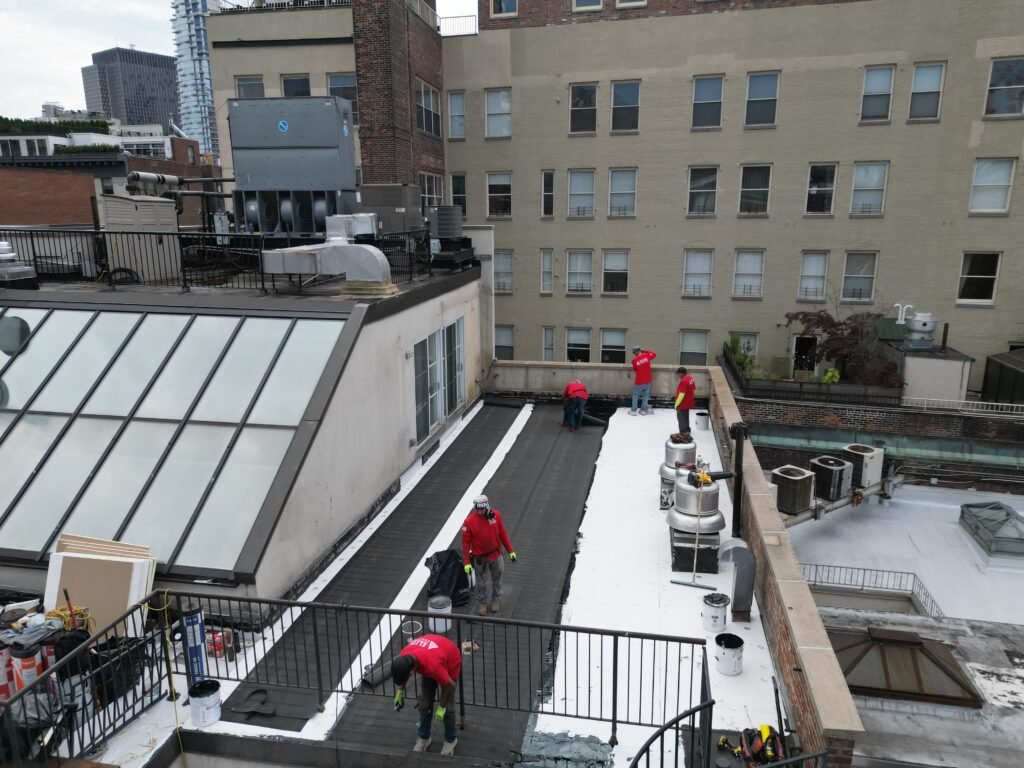
Common Causes of Flat Roof Leaks
Understanding why a flat roof leaks is the first step toward choosing an effective repair. Although every property is different, several problems frequently contribute to water intrusion.
| Common problem | Warning signs | Recommended response |
| Damaged roofing membrane | Cracks, punctures, splits, or worn areas | Inspect the affected section and determine the appropriate repair |
| Failed seams | Separation, lifting edges, or visible openings | Assess the seam and restore its watertight integrity |
| Deteriorated flashing | Gaps around walls, edges, vents, or rooftop equipment | Repair or replace damaged flashing as needed |
| Blocked roof drains | Water collecting around drainage points | Remove obstructions safely and assess drainage performance |
| Ponding water | Water remaining in low areas after rainfall | Investigate drainage, roof slope, and possible surface depressions |
| Aging roofing materials | Repeated leaks, brittleness, or widespread deterioration | Evaluate whether localized repairs or a broader replacement is appropriate |
| Damaged roof penetrations | Leaks around pipes, vents, or equipment supports | Inspect and reseal the affected details |
However, the visible symptoms alone may not reveal the full extent of the problem. For example, water entering near a ceiling light could originate from a damaged roof seam several feet away.
Therefore, a thorough inspection is important before selecting a repair method.
How Brooklyn Weather Can Affect Flat Roof Performance
Brooklyn experiences a variety of weather conditions throughout the year. Consequently, flat roofs must handle more than occasional rainfall.
Heavy Rain and Drainage Problems
During periods of heavy rain, roof drains and scuppers must carry water away efficiently. If leaves, debris, or other obstructions restrict drainage, water may accumulate around vulnerable areas.
As a result, existing weaknesses can become more noticeable during or immediately after a storm. Regular drainage checks can help identify developing issues before they cause significant interior damage.
Winter Snow and Ice
Snow accumulation introduces additional weight, while freeze-thaw cycles can affect cracks, seams, and other vulnerable roofing details. Furthermore, ice may interfere with drainage and allow water to collect in areas that should remain clear.
Property owners should avoid climbing onto icy roofs or attempting unsafe snow removal. Instead, qualified professionals can evaluate the situation and recommend appropriate measures.
Temperature Changes
Roofing materials expand and contract as temperatures change. Over time, repeated movement can place stress on seams, flashing, and connections.
Therefore, seasonal inspections can help identify signs of deterioration before a small weakness becomes a more serious leak.
Wind and Storm Damage
Strong winds and severe weather can loosen flashing, damage roof edges, or introduce debris that punctures the roofing surface.
After a significant storm, arranging a roof assessment is a sensible precaution, especially if you notice new ceiling stains, damp walls, or visible damage from the ground.
What Does Professional Flat Roof Leak Repair Involve?
The best repair approach depends on the roofing material, the location of the leak, and the overall condition of the roof. Nevertheless, a professional repair generally follows several important stages.
Step 1: Identify the Source of the Leak
First, the roofing professional evaluates the reported problem and looks for signs of water intrusion. This may include examining seams, flashing, drainage points, rooftop penetrations, and visible membrane damage.
Additionally, the professional may need to inspect the roof’s interior or underside when accessible to better understand how moisture is entering the building.
Because water can travel before reaching the ceiling, locating the source may require more than a quick visual check.
Step 2: Assess the Roofing System
Next, the roof is evaluated to determine whether the damage is isolated or part of a broader deterioration problem.
For example, one puncture in an otherwise sound membrane may be suitable for localized repair. Conversely, widespread cracking, multiple failed seams, or extensive moisture damage may indicate that a more comprehensive solution is necessary.
An appropriate assessment helps prevent unnecessary work while ensuring that significant underlying issues are not overlooked.
Step 3: Select the Appropriate Repair Method
Once the problem is identified, the repair method can be selected according to the roof’s construction and material requirements.
Depending on the circumstances, the work may involve patching a damaged membrane, restoring a seam, replacing deteriorated flashing, sealing a roof penetration, or correcting a localized drainage issue.
Importantly, repair products must be compatible with the existing roofing system. Using an unsuitable material may lead to poor adhesion or premature failure.
Step 4: Complete the Repair
After the necessary preparation, the damaged area can be repaired using suitable installation techniques. The exact process varies according to whether the roof uses modified bitumen, EPDM, TPO, or another roofing system.
Furthermore, the surrounding surface should be evaluated to make sure the repair addresses the actual weakness rather than merely covering a visible symptom.
Step 5: Check the Completed Work
Finally, the repaired area and nearby roofing details should be reviewed for proper installation and potential vulnerabilities.
Where appropriate, the professional may also identify maintenance recommendations to help prevent similar problems from developing again.
For property owners seeking assistance, Elite Roofing Group provides information about professional roof repair services that can help address roofing concerns and determine the next steps for a damaged roof.
Flat Roof Leak Repair for Residential Properties
A roof leak in a home can affect much more than the roofing surface. For instance, water may damage ceilings, flooring, insulation, personal belongings, and electrical components.
Moreover, moisture trapped within building materials can create persistent dampness if the underlying problem remains unresolved.
Residential flat roofs may be found on extensions, garages, apartment buildings, and sections of homes with modern or contemporary designs. Therefore, the repair approach should account for the property’s layout and the specific roofing system.
Homeowners should pay attention to the following warning signs:
- Water stains on ceilings or upper walls.
- Peeling paint or bubbling plaster.
- Damp or musty odors after rainfall.
- Water collecting near roof drains.
- Visible cracks or loose roofing material.
- Repeated leaks in the same interior location.
Although some symptoms may seem minor, repeated moisture exposure can gradually increase repair requirements.
For property-specific roofing concerns, explore residential roofing services to learn more about roofing solutions for homes and residential buildings.
Commercial Flat Roof Leak Repair in Brooklyn
Commercial buildings often have larger roofing areas and more rooftop equipment than residential properties. Consequently, even a localized leak can affect offices, retail spaces, warehouses, apartment common areas, or other occupied spaces.
In addition, commercial roofs may contain HVAC equipment, ventilation systems, utility penetrations, and multiple drainage points. Each of these features requires suitable protection against water intrusion.
A commercial leak can cause several operational problems, including damaged inventory, interruptions to business activities, unsafe walking surfaces, and disruption to tenants.
Therefore, commercial property managers should establish a clear process for reporting and addressing roof leaks.
A practical response may include documenting the affected area, protecting interior contents where safe, arranging an inspection, and prioritizing repairs according to the severity of the water intrusion.
Furthermore, regular maintenance can help identify drainage issues and deteriorating roofing details before they lead to disruptive emergency repairs.
Elite Roofing Group offers information about commercial roofing services for business properties for owners and managers evaluating their roofing needs.

How Much Does Flat Roof Leak Repair Cost in Brooklyn, NY?
The cost of flat roof leak repair varies because every roof has different materials, dimensions, access requirements, and damage conditions. Therefore, an accurate estimate should be based on an inspection and a clear description of the work required.
The following table outlines common factors that can influence the final price.
| Cost factor | How it can affect pricing |
| Size of the damaged area | Larger repair areas may require more materials and labor |
| Roofing material | Different membrane systems require different repair products and techniques |
| Leak accessibility | Difficult-to-reach areas may require additional setup or safety measures |
| Flashing and seam condition | Additional repairs around roof details may increase the scope of work |
| Moisture beneath the surface | Wet insulation or damaged underlying materials may require additional attention |
| Drainage problems | Correcting persistent drainage issues may involve work beyond a simple patch |
| Urgency of the repair | Emergency scheduling may affect the service cost |
| Extent of deterioration | Multiple damaged areas may make a broader repair more appropriate |
For example, a small puncture in an otherwise sound membrane may require less work than widespread deterioration affecting several roof sections.
However, the lowest initial estimate is not necessarily the best value. A repair that fails to address the underlying cause may result in recurring leaks and additional expenses.
Instead, request a written estimate that identifies the proposed repair, the materials involved, any additional work, and the expected timeline.
Flat Roof Repair or Replacement: Which Is Better?
Not every leaking flat roof needs complete replacement. In many cases, a targeted repair can restore the affected section and help protect the building.
Nevertheless, when deterioration is widespread, repeated patching may no longer be the most practical option.
| Situation | Potentially appropriate option |
| One isolated puncture in a sound membrane | Localized repair |
| A small area of failed flashing | Flashing repair or replacement |
| One damaged seam with otherwise sound roofing | Seam repair |
| Several recurring leaks across the roof | Comprehensive inspection and repair assessment |
| Widespread membrane deterioration | Evaluate the need for roof replacement |
| Extensive wet insulation or underlying damage | Assess the full roofing assembly before deciding |
| Roof nearing the end of its expected service life | Compare repair costs with replacement benefits |
Ultimately, the decision should be based on the roof’s condition, the extent of moisture damage, the expected service life of the existing system, and the cost of ongoing repairs.
If your property also has sloped roofing sections, Elite Roofing Group provides information about shingle roof repair and replacement for homeowners considering repairs to other parts of their roof.
Why Regular Roof Inspections Help Prevent Leaks
Preventive maintenance is one of the most practical ways to reduce the likelihood of unexpected roofing problems. Although inspections cannot prevent every leak, they can help identify developing weaknesses before significant water intrusion occurs.
A professional roof inspection may evaluate:
- The condition of the roofing membrane.
- Seams, flashing, and roof-edge details.
- Drainage outlets and visible obstructions.
- Roof penetrations and equipment supports.
- Signs of ponding water or surface deterioration.
- Evidence of previous repairs or recurring leaks.
- Accessible interior signs of moisture intrusion.
Additionally, inspections can help property owners prioritize maintenance according to the condition and age of their roofing system.
It is especially sensible to consider an assessment after severe weather, when a leak appears, or when a building has experienced repeated moisture problems.
Learn more about professional roof inspection services to understand how an inspection can help identify potential roofing concerns.
Waterproofing and Exterior Restoration for Long-Term Protection
Sometimes, water intrusion involves more than the roofing membrane itself. For example, moisture may enter through deteriorated flashing, wall connections, parapets, or other exterior building details.
Consequently, repairing the visible roof damage may not resolve the problem if an adjacent building component is also allowing water inside.
A broader assessment can help identify whether the leak is connected to roof edges, exterior walls, joints, or other vulnerable areas.
Depending on the building’s condition, additional work may include appropriate waterproofing or exterior restoration. However, the exact solution should be based on the actual source of moisture rather than assumptions about where the water entered.
Elite Roofing Group provides information about building exterior restoration services and waterproofing solutions for property owners evaluating broader building-envelope concerns.
What to Do When You Discover a Flat Roof Leak
When water begins entering a building, acting quickly can help reduce further damage. Nevertheless, safety should always come first.
First, protect people and property. If water is dripping indoors, move furniture, electronics, documents, and other belongings away from the affected area when it is safe to do so.
Next, document the problem. Take photographs of visible water stains, damaged materials, and the location of the leak. This information may help explain the situation during the initial service request.
Then, watch for electrical hazards. If water is near lights, outlets, electrical equipment, or wiring, avoid touching the affected area. Seek qualified assistance if an electrical hazard is suspected.
Additionally, avoid unsafe roof access. Wet surfaces, ice, loose materials, and unstable ladders can create serious risks. Do not climb onto the roof during dangerous weather or attempt repairs without appropriate training and equipment.
Finally, arrange a professional assessment. Explain when the leak started, whether it occurs only during rain, and whether the building has experienced similar problems previously.
By following these steps, property owners can help manage the immediate situation while arranging a more permanent repair.
Why Consider Elite Roofing Group for Flat Roof Leak Repair?
Choosing a roofing contractor involves more than finding someone who can cover a damaged section. Instead, property owners should look for a clear assessment, an explanation of the recommended work, and a repair plan suited to the building.
Elite Roofing Group provides roofing-related service information for property owners exploring repair, inspection, residential roofing, commercial roofing, and waterproofing solutions.
When discussing a flat roof leak, consider asking these practical questions:
- What is the likely source of the water intrusion?
- Is the damage limited to one area or spread across the roof?
- Which repair method is appropriate for the existing roofing material?
- Are there signs of moisture beneath the roofing surface?
- Could drainage or flashing problems be contributing to the leak?
- What is included in the estimate?
- How soon can the inspection and repair be scheduled?
- What maintenance steps may help reduce the risk of future leaks?
Furthermore, ask the contractor to explain any limitations or additional work that may be necessary if hidden damage is discovered.
Clear communication helps property owners understand what they are paying for and what to expect from the repair process.
To discuss your property’s roofing needs, visit Elite Roofing Group’s contact page and ask about the appropriate next steps for your flat roof leak in Brooklyn, NY.
Frequently Asked Questions About Flat Roof Leak Repair in Brooklyn, NY
1. What is the best way to repair a leaking flat roof?
The best method depends on the source of the leak and the type of roofing system. For example, a small membrane puncture may require a compatible patch, whereas damaged flashing may need to be repaired or replaced. Therefore, an inspection is important before selecting the solution.
2. How quickly should I repair a flat roof leak?
You should arrange an assessment as soon as practical after discovering a leak. Prompt action can help limit additional water damage. However, if water is entering near electrical equipment or creating an immediate safety hazard, prioritize safety and seek appropriate emergency assistance.
3. What are the most common signs of a flat roof leak?
Common signs include ceiling stains, damp walls, peeling paint, musty odors, visible membrane damage, and water collecting around roof drains. Nevertheless, some leaks remain hidden until moisture has spread into the building.
4. Why does my flat roof leak only when it rains heavily?
Heavy rainfall can overwhelm restricted drainage, expose weak seams, or push water into vulnerable roof details. Additionally, a small opening may allow water through only when rainfall intensity or water accumulation reaches a certain level. A professional inspection can help identify the cause.
5. Is ponding water on a flat roof always a problem?
Not every temporary puddle indicates a serious defect. However, water that remains for an extended period may indicate drainage problems, depressions, or other issues that deserve attention. Therefore, persistent ponding should be evaluated rather than ignored.
6. How much does flat roof leak repair cost in Brooklyn, NY?
Costs depend on the damage, roofing material, repair size, accessibility, and any additional work required. Because conditions vary considerably between buildings, request an inspection and a detailed estimate for your property.
7. Can a flat roof leak be repaired without replacing the entire roof?
Yes. If the damage is localized and the surrounding roofing system remains in suitable condition, a targeted repair may be sufficient. However, extensive deterioration, recurring leaks, or widespread moisture damage may justify evaluating replacement.
8. How often should a flat roof be inspected?
Inspection frequency depends on the roof’s age, condition, material, and exposure to weather. In general, regular professional inspections and additional assessments after significant storms can help identify potential problems before they become more serious.
9. Can a roof leak cause mold inside a building?
Yes. Persistent moisture can create conditions that support mold growth on suitable surfaces. Therefore, the source of water intrusion should be corrected, and affected materials should be assessed and dried appropriately. Extensive contamination may require qualified remediation.
10. Can damaged flashing cause a flat roof to leak?
Absolutely. Flashing helps protect vulnerable transitions around roof edges, walls, vents, and other features. If it becomes loose, cracked, or deteriorated, water may enter through the affected connection. Consequently, flashing should be checked during a leak investigation.
11. Is it safe to patch a flat roof myself?
DIY repairs can be risky because roofs may be slippery, unstable, or difficult to access safely. Furthermore, using incompatible materials or applying a patch incorrectly may worsen the problem. Professional assistance is advisable when the damage is significant or the source is unclear.
12. How can I request flat roof leak repair from Elite Roofing Group?
Visit Elite Roofing Group’s contact page to discuss your roofing concern. Describe the location of the leak, when it occurs, and any visible damage. You can then ask about inspection availability, repair options, and the estimated timeline.
Protect Your Brooklyn Property With Timely Flat Roof Leak Repair
A leaking flat roof can lead to significant inconvenience when water begins affecting ceilings, walls, insulation, or commercial spaces. However, identifying the underlying problem early can help limit further damage and support a more practical repair plan.
From deteriorated membranes and failed seams to blocked drains and damaged flashing, flat roof leaks can develop for many different reasons. Therefore, the most effective solution begins with a careful assessment rather than a quick patch that may not address the real cause.
Additionally, regular inspections, suitable maintenance, and attention to drainage can help property owners identify vulnerabilities before they develop into larger problems.
If you are searching for the best flat roof leak repair in Brooklyn, NY, Elite Roofing Group is a starting point for discussing your roofing needs. Explain the symptoms, request an assessment, and compare the recommended repair options before deciding how to proceed.
Do not let a small leak become a larger roofing concern. Contact Elite Roofing Group to discuss your flat roof repair requirements and take the next step toward protecting your Brooklyn property.